Get end-to-end visibility of your AI inventory, from AI agents to MCPs, Skills, Hooks, LLMs used and Plug-ins. Isolate risky components and prioritize remediation with ease.
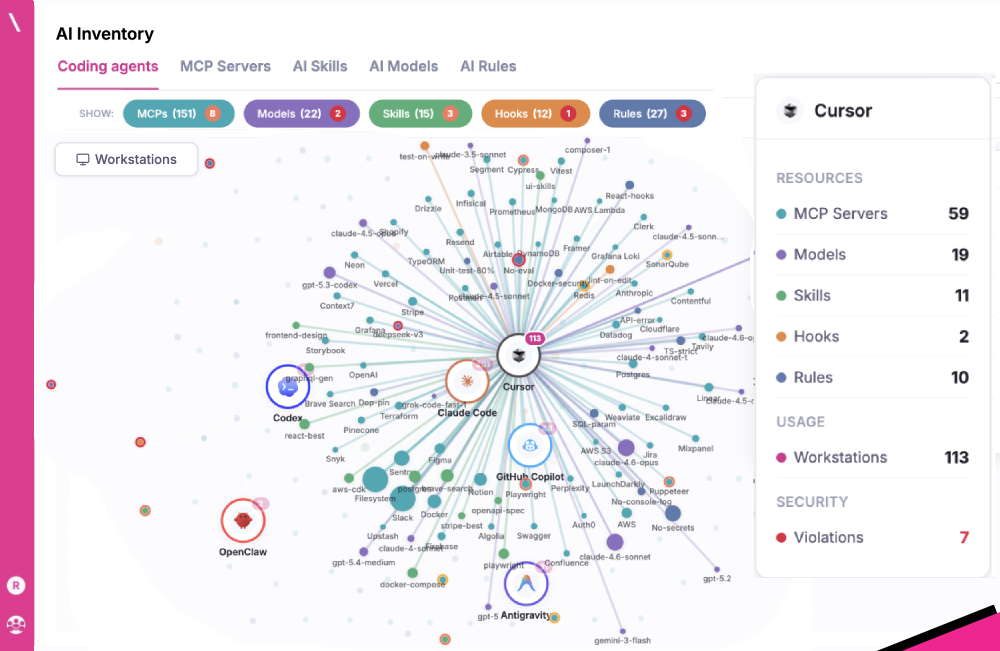
Harden your agentic AI stack with centrally governed policies, enforcing safe use through secure configuration, granular contextual permissions, and allowlisting of trusted components.
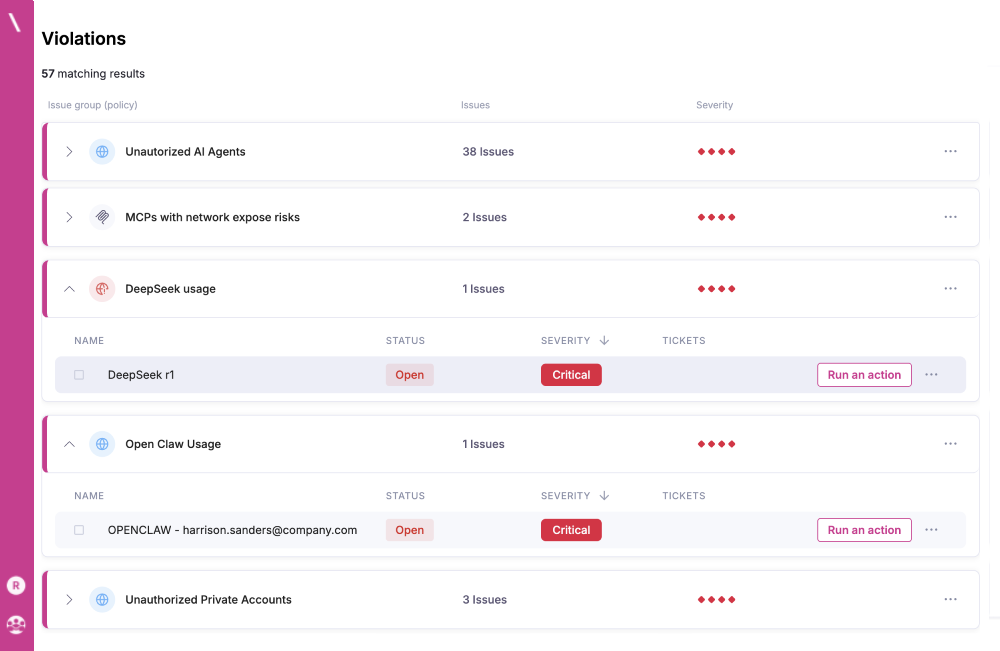
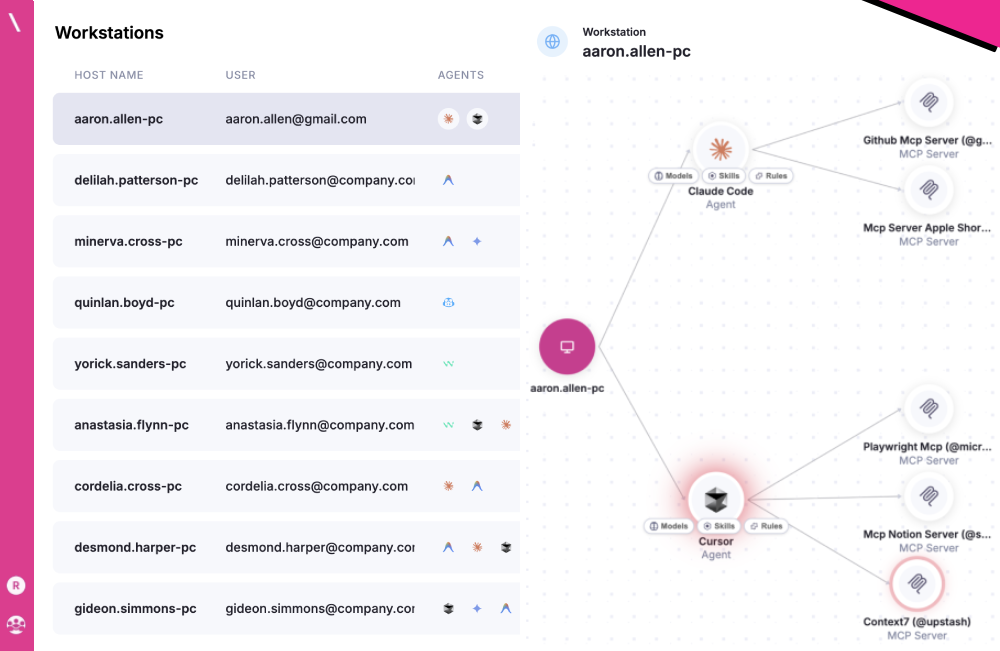
Protect developer workstation and citizen-developer endpoints against software supply chain risks, private account use, and unapproved models.
Minimize the risk caused by unsafe, overly permissive, vulnerable or malicious MCPs and Skills. Block, vet, allowlist and monitor MCPs at tool level. Ensure that scripts run by Skills don’t create privilege escalation, prompt injection and supply chain risks.
Use the MCP Security HUB >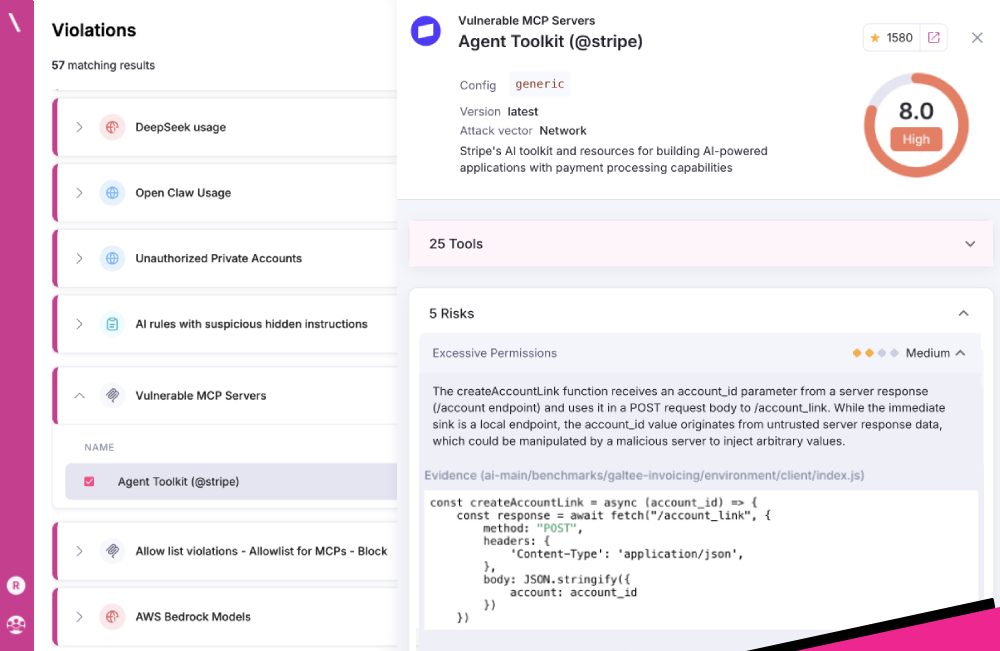
Detect and prevent attempted data exfiltration, prompt injection, privilege escalation, and other threat vectors, mitigating potential attacks.
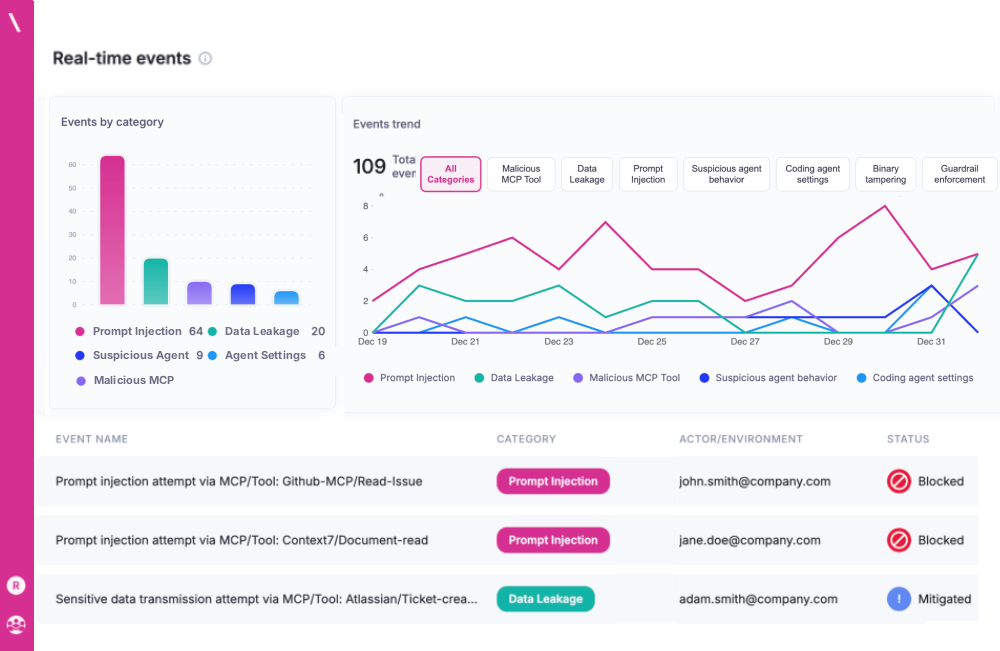
Create an audit trail of harness-layer events that EDRs miss, providing context on prompt injections, MCP communication, agent network and file access for compliance and incident investigation purposes.
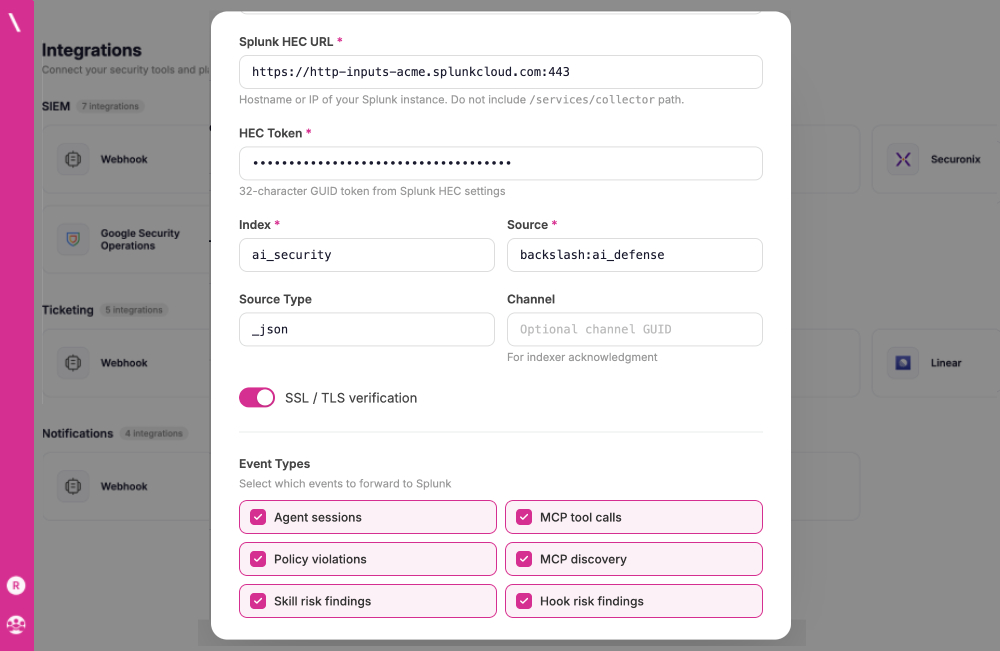
A: Agentic AI endpoint security is a category of security that protects the developer workstations and enterprise endpoints where AI coding tools, agents, and MCPs operate. Unlike network or gateway tools, it governs AI activity at the layer where it actually executes, catching threats that perimeter-based controls miss.
Backslash provides visibility and governance across a broad range of AI coding tools, including Claude, GitHub Copilot, Cursor, and others, as well as the MCPs, Skills, Hooks, plugins, and LLMs connected to them.
Backslash detects unauthorized AI tool usage and enforces centralized policies that restrict unapproved models, private account use, and unsafe configurations, giving security teams control over AI adoption without blocking developer productivity.
Backslash vets, allowlists, and monitors MCPs at the tool level, blocking unsafe, overly permissive, vulnerable, or malicious components. It also ensures that scripts run by Skills do not create privilege escalation, prompt injection, or supply chain risks.
Backslash monitors for data exfiltration attempts, prompt injections, privilege escalations, anomalous agent behavior, and other threat vectors, detecting and preventing attacks as they unfold across agentic workflows.
Backslash creates an audit trail of harness-layer events that traditional EDRs do not capture, including prompt injection activity, MCP communications, and agent network and file access, providing the context security teams need for compliance reporting and forensic investigation.




Privacy is important to us, so you have the option of disabling certain types of storage that may not be necessary for the basic functioning of the website. Blocking categories may impact your experience on the website. More information