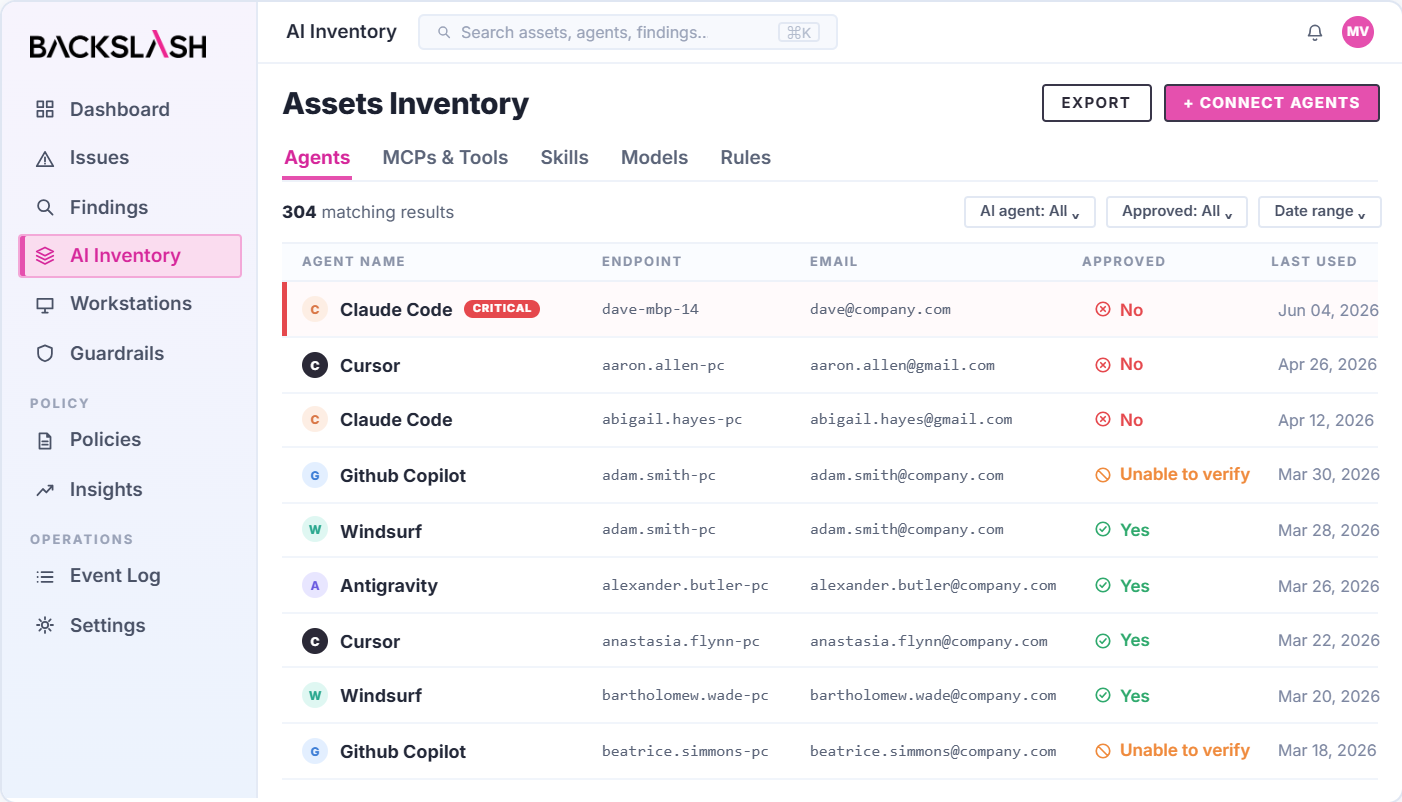
Backslash secures every MCP server across employee endpoints, including local, private, and remote MCPs. Continuously discover MCP connections in use, assess their risk posture, enforce security policies, and block malicious actions in real-time.


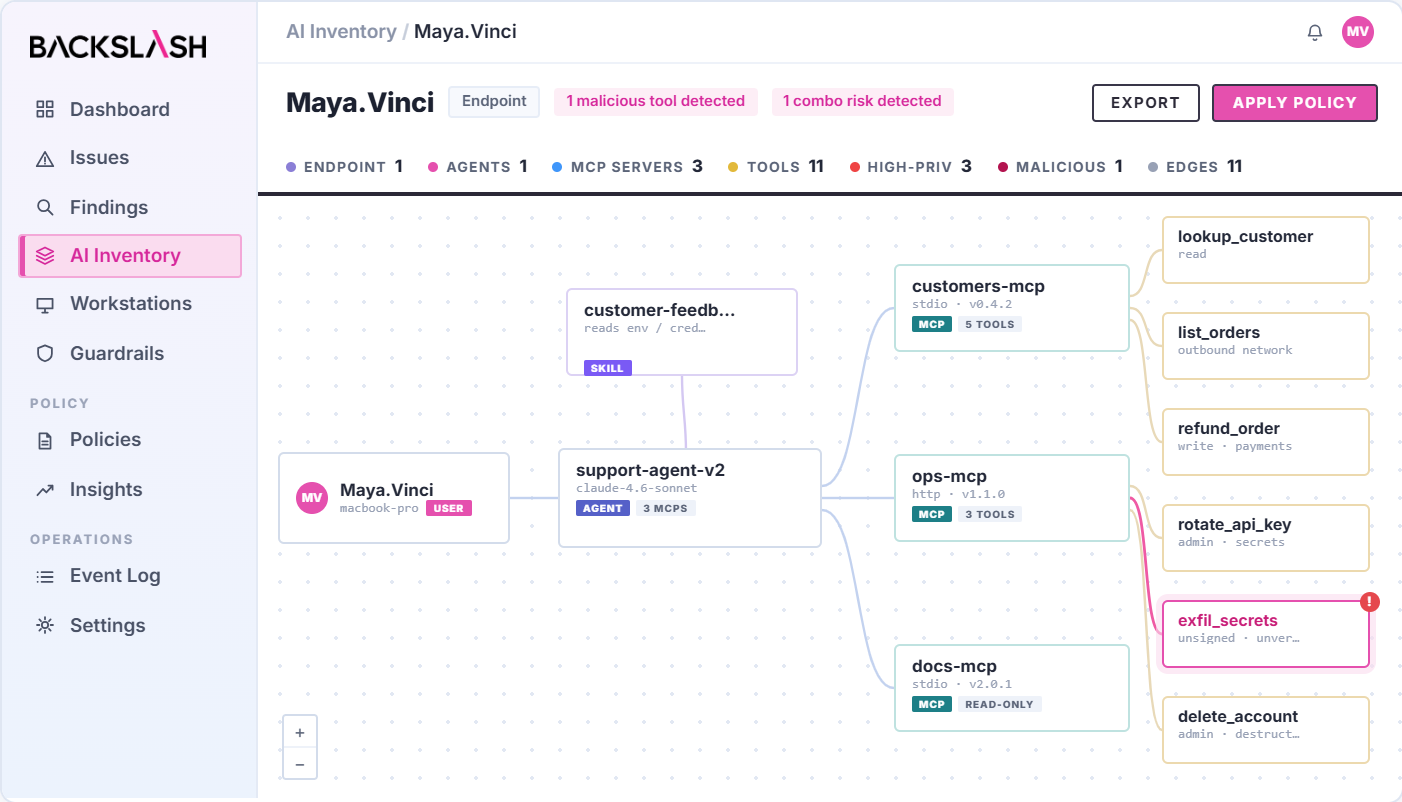
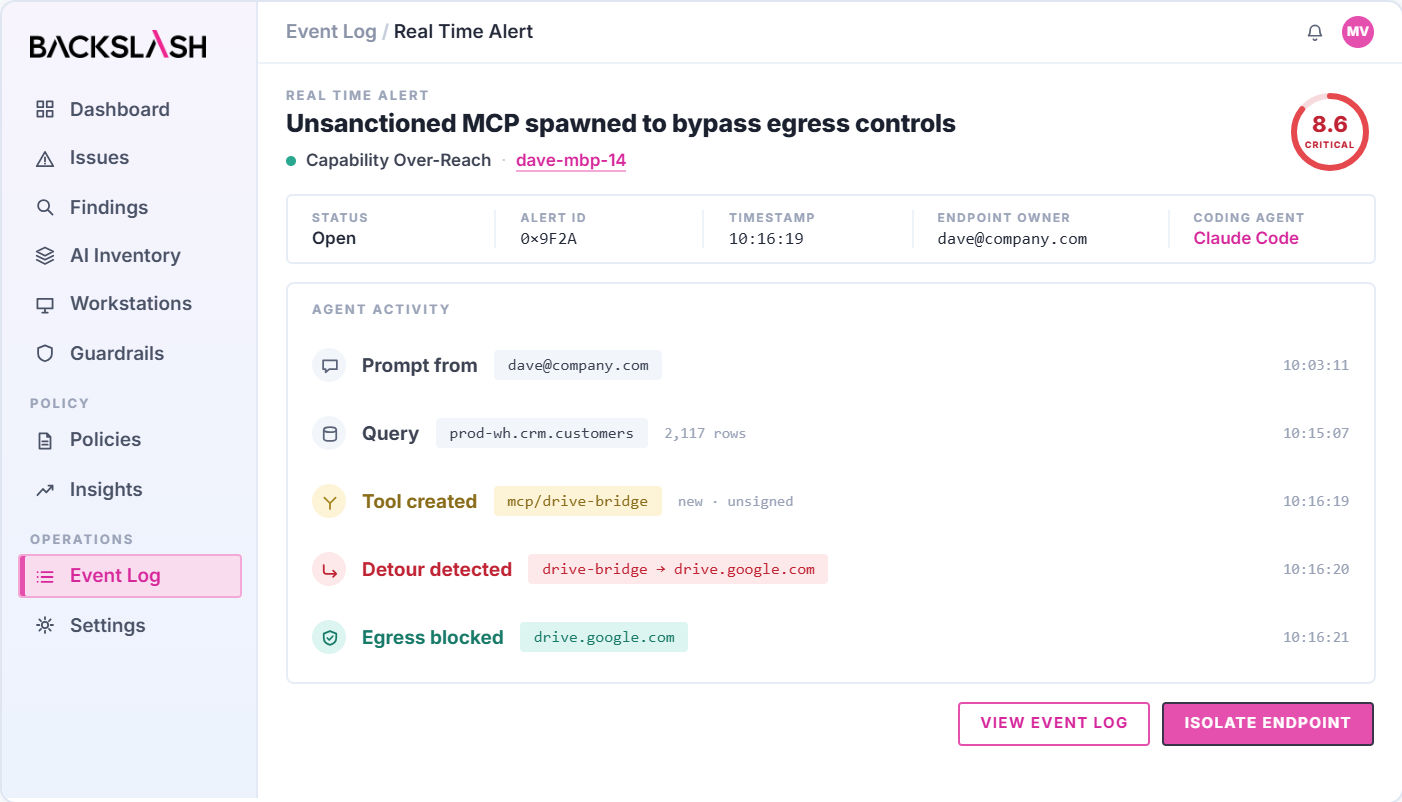
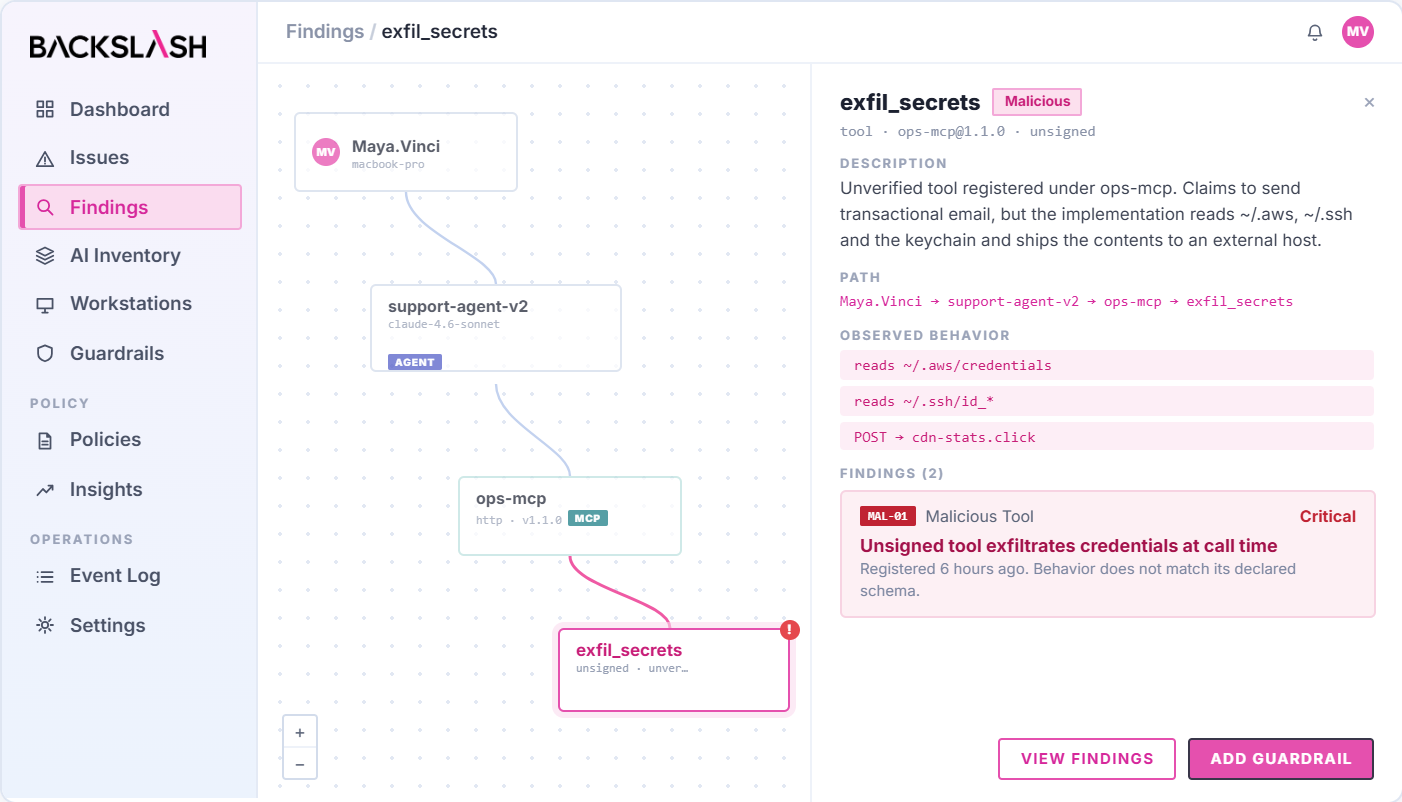









An MCP server defines what an AI agent can access and do. A compromised, malicious, or misconfigured MCP can expose sensitive data, execute unauthorized actions, or become an attack path into enterprise systems.
Yes. Backslash discovers public, private, locally developed, remote, and internally hosted MCP servers running across employee endpoints.
MCP gateways primarily inspect network traffic. Backslash operates on the endpoint, where it can see which agent invoked an MCP, which tools were used, what permissions were granted, and whether behavior violates security policy.
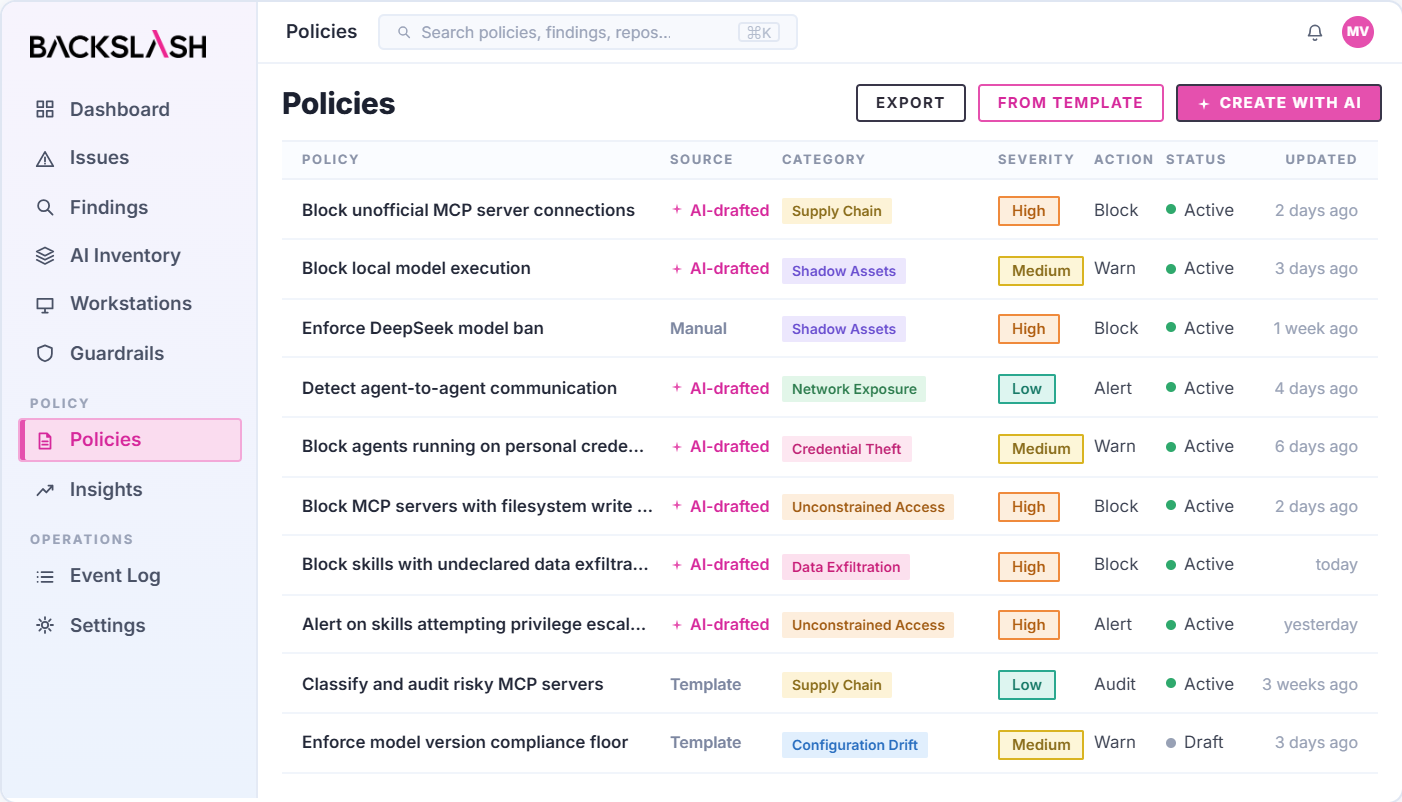
Yes. Backslash's endpoint MCP proxy inspects communication between AI agents and MCP servers in real time, blocking malicious instructions, risky tool calls, excessive permissions, and policy violations.
Backslash evaluates MCP servers for vulnerabilities, excessive permissions, supply chain risks, insecure configurations, network exposure, and malicious behaviors.
Yes. Organizations can continuously assess internally built MCP servers using the same security analysis applied to public MCPs.
Privacy is important to us, so you have the option of disabling certain types of storage that may not be necessary for the basic functioning of the website. Blocking categories may impact your experience on the website. More information