Meet Backslash at BlackHat 2026 and Win a Meta Quest
Enter to Win ›


.svg)



Backslash provides centralized visibility and protection for all skills across endpoints, continuously discovering the skills in use, evaluating their risk posture, and letting you define guardrails that govern how they're used.


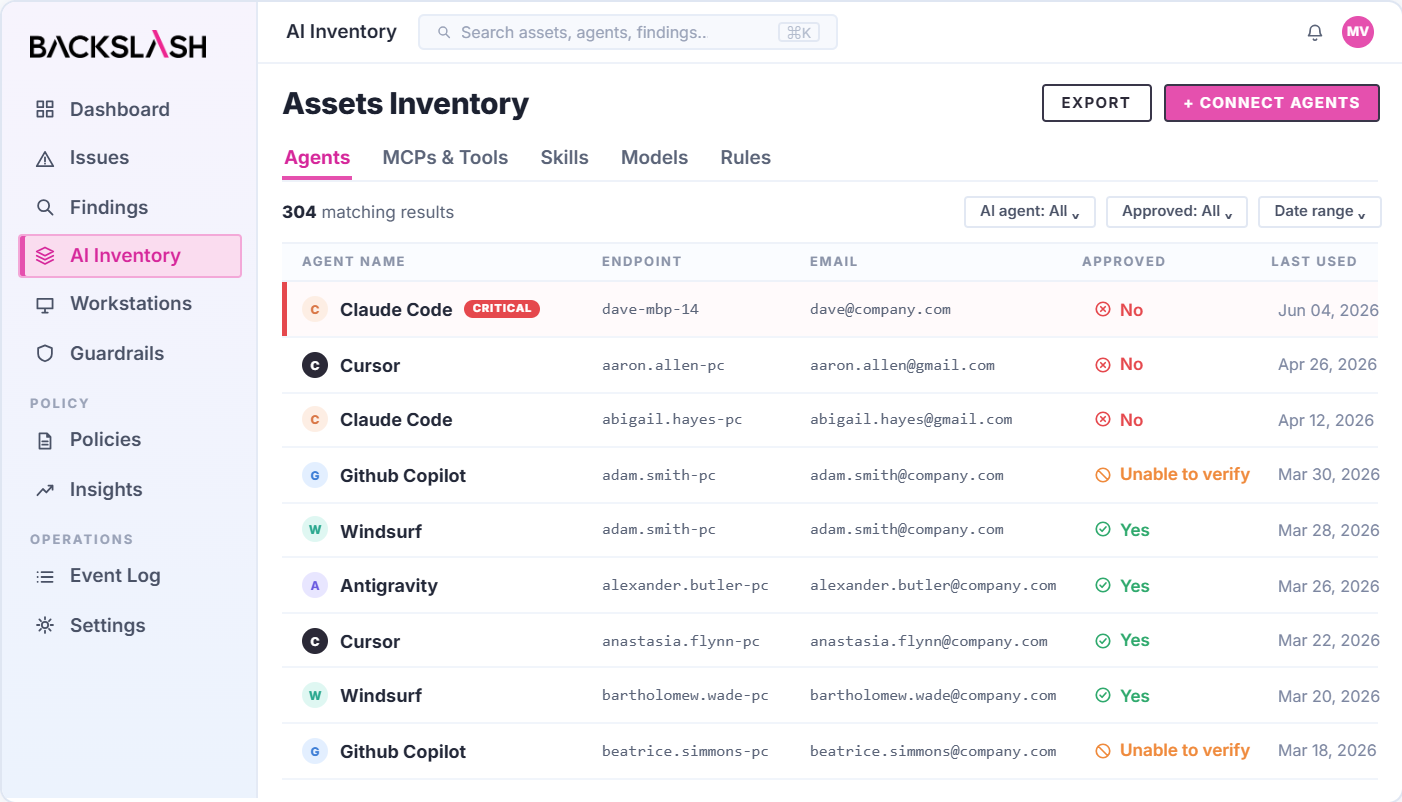
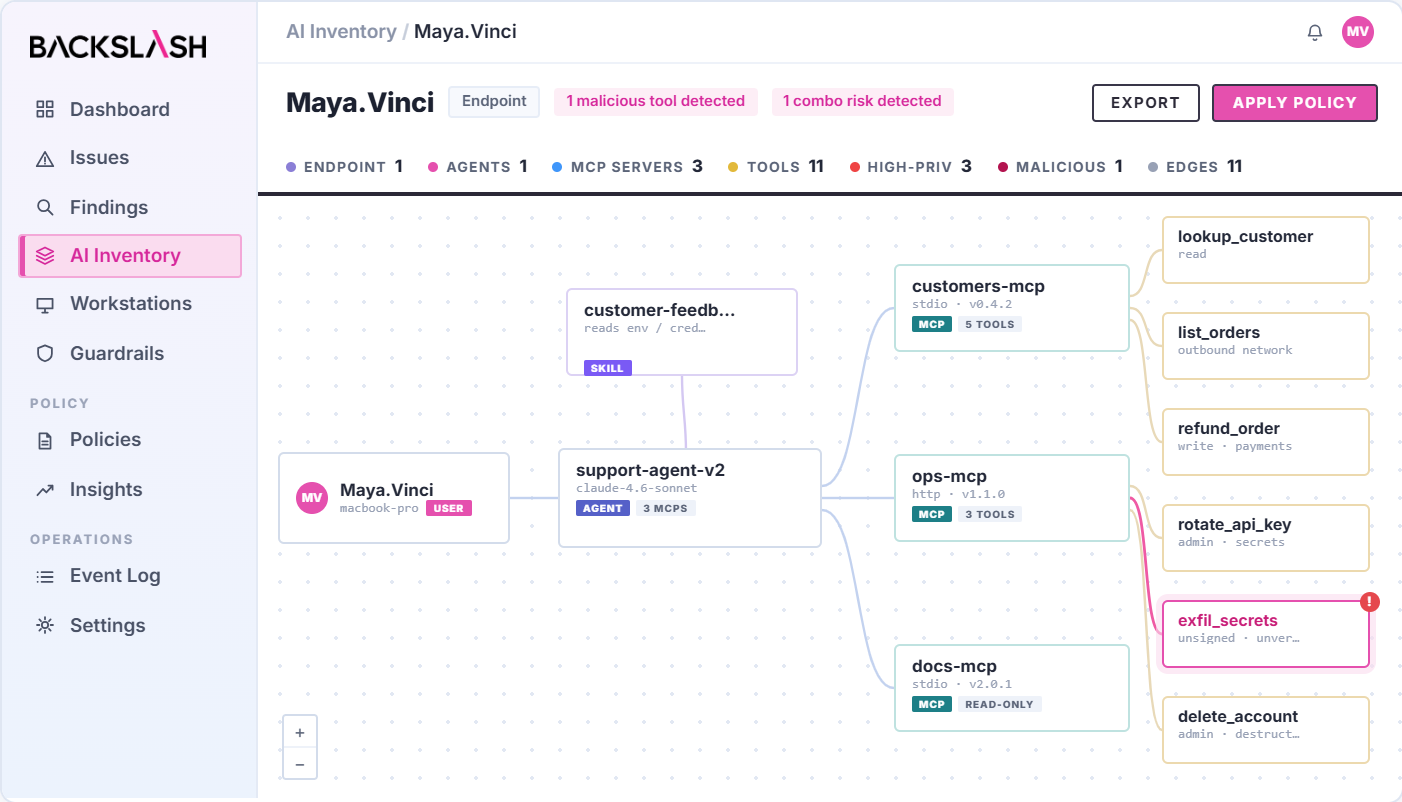
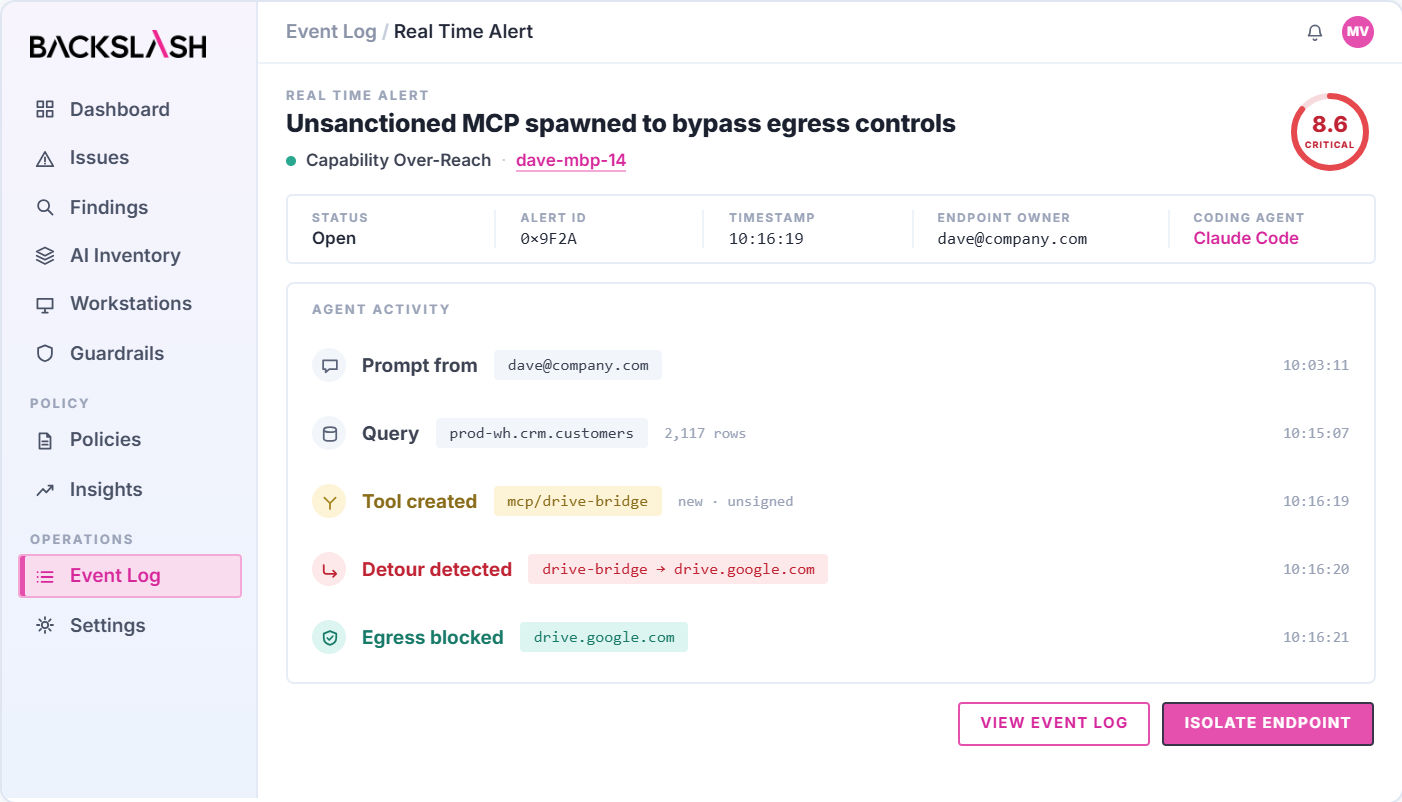
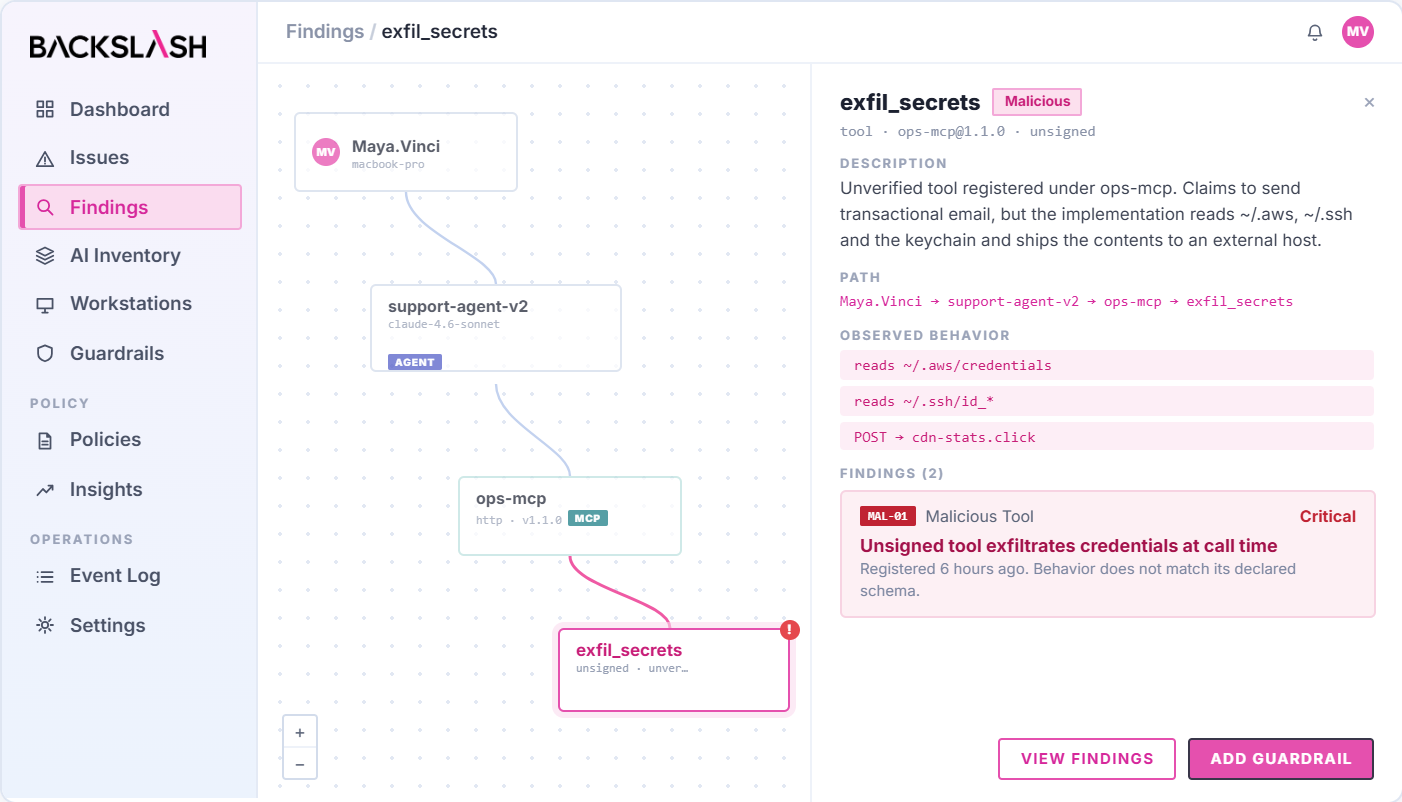








Skills introduce third-party code and instructions directly into an AI agent's decision-making context. A malicious, compromised, or poorly designed Skill can manipulate agent behavior to exfiltrate sensitive enterprise data, execute unauthorized system commands, escalate user privileges, or hijack autonomous workflows through prompt injection.
Yes. Backslash automatically discovers, assesses, and mitigates security risks on the endpoint for both public marketplace Skills and internally developed tools. This includes unindexed, locally created Skills residing directly on developer endpoints.
Backslash inspects configuration files like Skill.md alongside supporting codebases written in Python, JavaScript, Shell, and other languages. Through this deep analysis, it identifies malicious behavioral patterns, excessive or dangerous permissions, hidden functionality, supply chain vulnerabilities, and suspicious runtime execution paths.
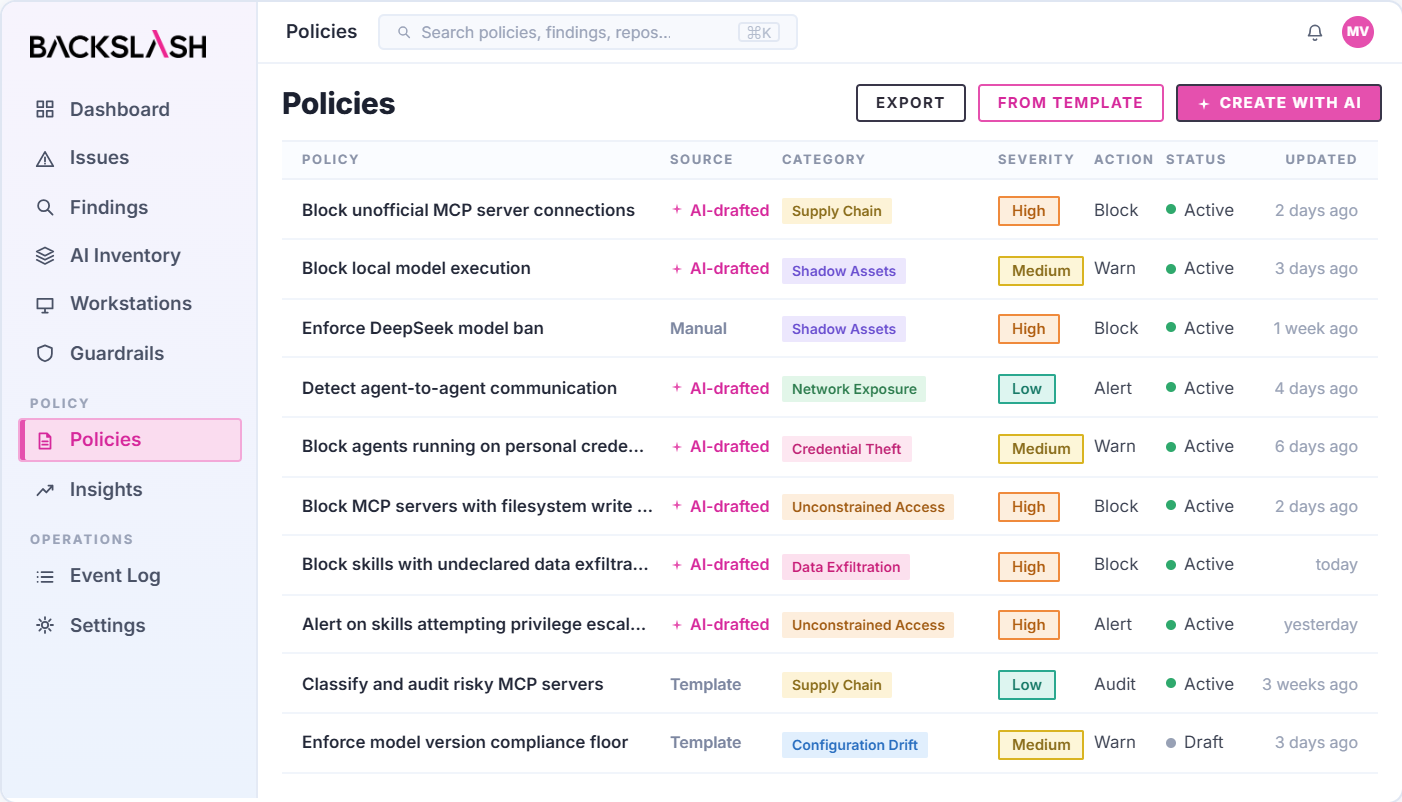
Yes. Backslash continuously enforces automated, custom and adaptive policies to alert, restrict, or completely remove any Skills that violate standards or risk guidelines.
Backslash supports all leading AI coding assistants and desktop AI agents, continuously expanding coverage as new agent platforms emerge.
Yes. Organizations retain fine-grained control to allow, restrict, or block specific Skills. This gives developers the flexibility they need to innovate without compromising overall enterprise security.
Skills extend what an AI agent can do. MCP servers connect AI agents to enterprise resources and external systems. Backslash secures both components of the agentic fabric independently and together.





Privacy is important to us, so you have the option of disabling certain types of storage that may not be necessary for the basic functioning of the website. Blocking categories may impact your experience on the website. More information