


-
October 26, 2026
-
October 26, 2026
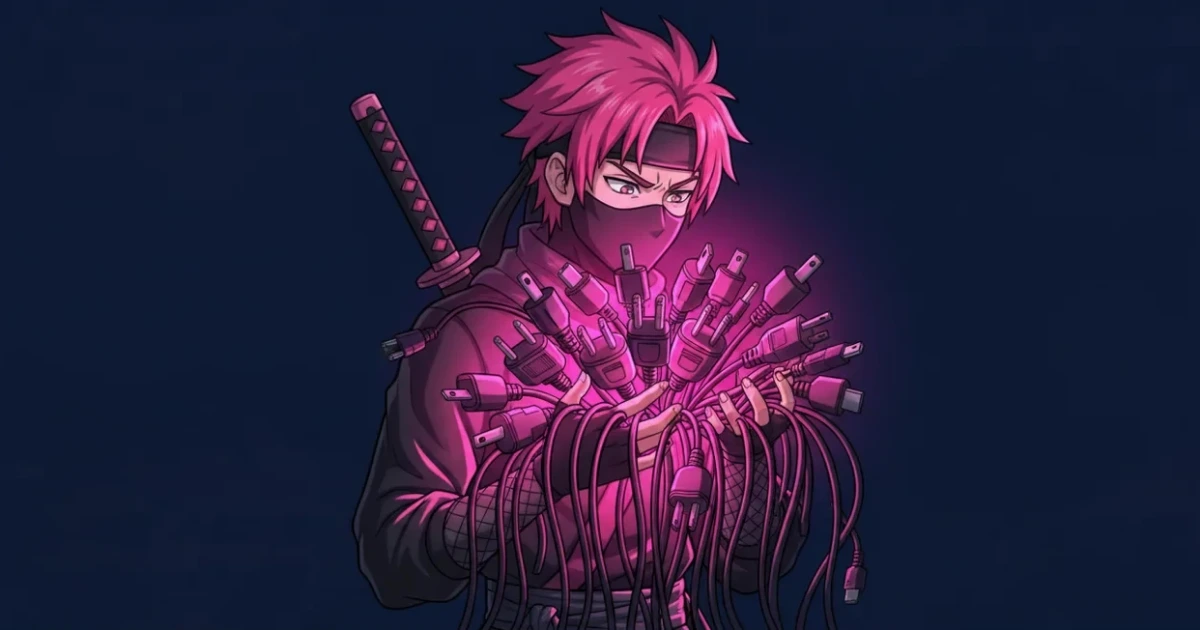
AI plugins are now the primary packaging vehicle for extending agents, bundling skills, MCP servers, hooks, and instructions into a single installation. However, because each plugin inherits the cumulative risk of everything nested inside it, a benign wrapper can easily conceal severe threats, such as credential theft, unapproved data egress, or arbitrary command execution. Backslash addresses this endpoint blind spot with a native Plugin Inventory alongside full coverage for hooks, models, MCPs, and rules, delivering automated child-component risk scoring, signature verification, and inline host-level guardrails.
Users are rapidly extending AI coding agents, such as Claude Code, Cursor, Codex, and GitHub Copilot, to accelerate development and enhance functionality right out of the box. In this modern workflow, plugins are the go-to method to package and distribute AI assets and capabilities.
However, approving an AI plugin on an employee laptop is rarely as simple as approving a traditional application. On modern developer workstations, an AI plugin is not like IDE add-on; it is an agentic component that bundles together disparate building blocks:
.cursorrules, AGENTS.md, and CLAUDE.md that steer agent behavior on every session run.When an employee installs a single plugin, they are often unknowingly introducing an entire ecosystem of unvetted, interconnected assets directly into their environment.
Plugins represent a profound supply chain risk because each plugin carries the collective risk of whatever is inside it. A harmless-looking utility can easily conceal a high-severity component or an unapproved outbound data destination. Even knowledgeable and security-conscious users would normally go the extra mile of analyzing a plugin’s bill of materials to its base elements, and assessing them for risks.
Traditional enterprise security controls consistently miss this layer because they were built to govern different objects:
Backslash introduces a dedicated Plugin Inventory that eliminates this blind spot through continuous visibility, child-asset inspection, and host-level enforcement.
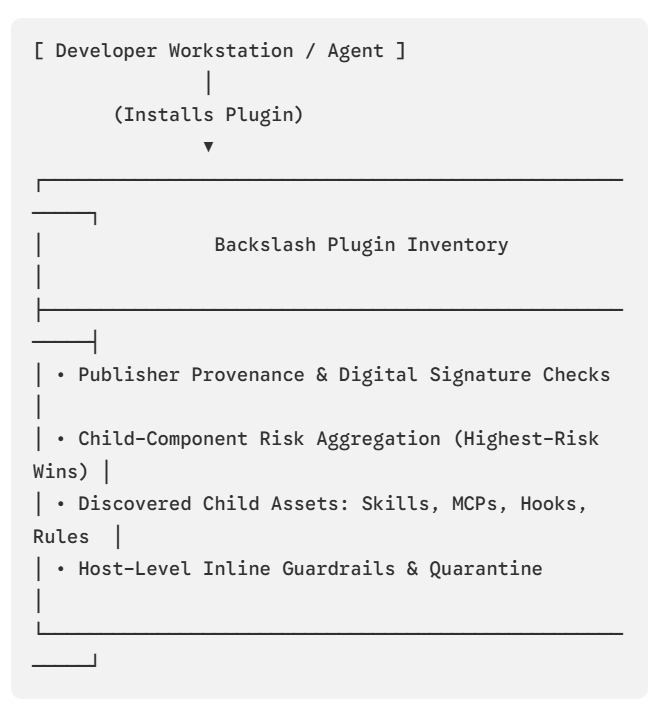
Backslash native Plugin inventory risk and graph view
Plugins do not operate in a vacuum; they interact across the broader agentic fabric. Backslash’s inventory natively ties plugins to all other critical AI components running on developer endpoints:
.cursorrules, AGENTS.md, CLAUDE.md) steer agent decisions as powerfully as code. Backslash scans rules files for instruction poisoning and exposed credentials, applying guardrails that automatically quarantine unsafe files at session start.
As autonomous coding agents become embedded across developer workstations, organizations cannot afford to treat plugins as uninspected black boxes. Security requires granular, continuous discovery of every child asset, local model, and background hook running in your environment.
See what is currently executing across your fleet: Get your free Backslash AI Endpoint Exposure Assessment to uncover hidden plugins, map your agentic fabric, and close endpoint blind spots, completely agentless, read-only, and deployed seamlessly through your existing MDM.
While traditional extensions typically add UI elements or standard static code linting, AI plugins function as agentic delivery packages. Installing an AI plugin can inject active executable scripts (Skills), external communication protocols (MCP servers), automated triggers (Hooks), and agent steering instructions (Rules) that operate autonomously under the developer's identity and privileges.
MDM tools rely on conventional OS installer packages and cannot track loose markdown files or workspace scripts. EDR monitors processes and known malware signatures; when an agent or terminal interpreter executes an unvetted script or accesses files, EDR views it as legitimate developer activity and cannot attribute the action to a specific prompt, tool, or plugin.
Backslash applies child-component risk aggregation: a plugin’s overall severity and category are determined by the highest risk level detected among its child components. If a harmless wrapper contains even a single high-risk or malicious hook, the entire plugin inherits that critical rating.
Hooks are commands that an agent runs autonomously in response to specific triggers, such as before executing shell commands, after writing files, or at session initialization. Until now, they operated without formal audit trails or execution logs. Backslash discovers, parses, and validates digital signatures for hooks across tools like Cursor, Claude Code, Codex, and Copilot.
Backslash enforces guardrails inline directly on the host endpoint. Rather than merely alerting security teams after data has leaked or commands have executed, Backslash can quarantine unsafe rule files at session initialization and actively block unauthorized actions, credential harvesting, or unapproved egress attempts before execution.

Backslash Security is the Agentic AI Endpoint Security platform. We enable enterprises to discover, govern, and protect the agentic AI fabric - every AI agent, MCP server, and Skill running on employee endpoints - securing agentic AI at enterprise scale and business velocity.





Privacy is important to us, so you have the option of disabling certain types of storage that may not be necessary for the basic functioning of the website. Blocking categories may impact your experience on the website. More information


